
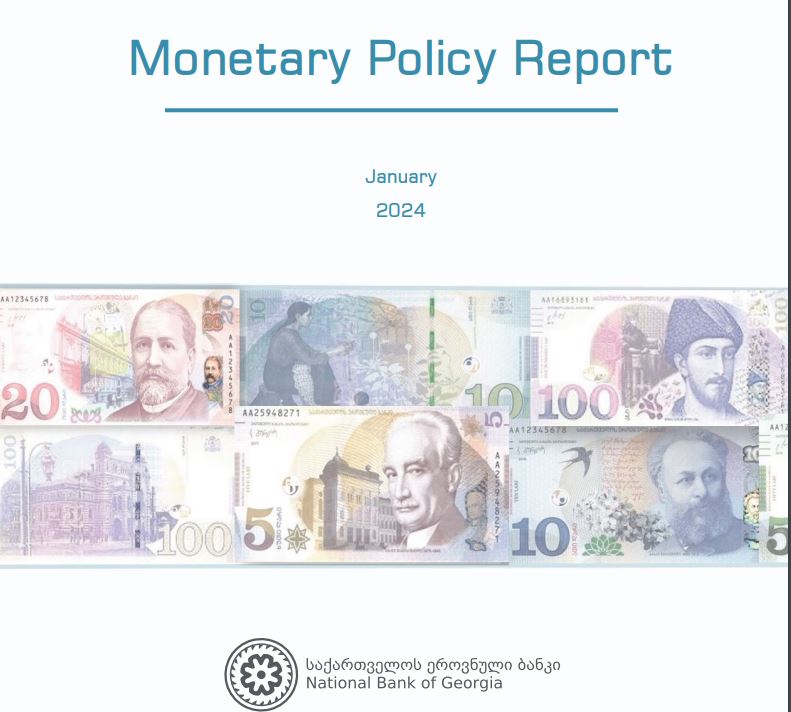
Monetary Policy Report, Georgia
The role of the National Bank of Georgia (NBG) is to influence aggregate demand and inflation expectations by adjusting the interest rate, thereby keeping inflation near to its target level in the medium term. Given the current uncertain circumstances, low
Application of Artificial Intelligence for Monetary Policy-Making
National Bank of Georgia, Working Papers, Authors: Mariam Dundua and Otar Gorgodze The National Bank of Georgia’s (NBG) Working Papers are published to elicit comments and encourage debate on ongoing research. Working Paper Series aim to present original research contributions
NATIONAL CENTER FOR EDUCATIONAL QUALITY ENHANCEMENT – key achievements and trends in Georgia’s Higher Education system
The National Center for Educational Quality Enhancement is a legal entity operating under the Ministry of Education and science of Georgia. The Center, for the purpose of external quality assurance, carries out authorization of educational institutions and accreditation of educational

GEORGIAN NATIONAL ENERGY AND WATER SUPPLY REGULATORY COMMISSION (GNERC) – REVIEW OF 2022
The Georgian National Energy and Water Supply Regulatory Commission (GNERC) has been regulating the electricity sphere since 1997, taking over the natural gas sector regulation in 1999 and water supply sector regulation in 2007 (as a result of legal changes).

BTU’s Third Mission – Potential and Actions Related to Popularizing Knowledge and Technology Transfer within University
The third mission of HEIs – that aims to connect and translate the knowledge generated within the university to the wider society has become increasingly important in the context of global knowledge economy. Universities are expected to bring more contribution

Importance of Integration of Green Technologies for Georgian Economy
Energy shortage is one of the main challenges of modern times. Global climate change has put the modern world in front of new challenges. This fact has especially affected the energy sector. The global COVID-19 pandemic has significantly changed the
Monetary Policy Report, Georgia
The role of the National Bank of Georgia (NBG) is to influence aggregate demand and inflation expectations by adjusting the interest rate, thereby keeping inflation near to its target level in the medium term. Given the current uncertain circumstances, low
Application of Artificial Intelligence for Monetary Policy-Making
National Bank of Georgia, Working Papers, Authors: Mariam Dundua and Otar Gorgodze The National Bank of Georgia’s (NBG) Working Papers are published to elicit comments and encourage debate on ongoing research. Working Paper Series aim to present original research contributions
NATIONAL CENTER FOR EDUCATIONAL QUALITY ENHANCEMENT – key achievements and trends in Georgia’s Higher Education system
The National Center for Educational Quality Enhancement is a legal entity operating under the Ministry of Education and science of Georgia. The Center, for the purpose of external quality assurance, carries out authorization of educational institutions and accreditation of educational
GEORGIAN NATIONAL ENERGY AND WATER SUPPLY REGULATORY COMMISSION (GNERC) – REVIEW OF 2022
The Georgian National Energy and Water Supply Regulatory Commission (GNERC) has been regulating the electricity sphere since 1997, taking over the natural gas sector regulation in 1999 and water supply sector regulation in 2007 (as a result of legal changes).
BTU’s Third Mission – Potential and Actions Related to Popularizing Knowledge and Technology Transfer within University
The third mission of HEIs – that aims to connect and translate the knowledge generated within the university to the wider society has become increasingly important in the context of global knowledge economy. Universities are expected to bring more contribution
Importance of Integration of Green Technologies for Georgian Economy
Energy shortage is one of the main challenges of modern times. Global climate change has put the modern world in front of new challenges. This fact has especially affected the energy sector. The global COVID-19 pandemic has significantly changed the