

What Factors Affect Bicycle Commuting? An Empirical Analysis in Tbilisi and Warsaw
This article has been published in journal ‘Folia Oeconomica Stetinensia’. Volume 24 (2024) Issue 1 DOI: 10.2478/foli-2024-0006 | 87–104 ISSN (print): 1730-4237 | ISSN (online): 1898-0198 The purpose of the article is to identify the factors that influence commuting by

NATIONAL BANK OF GEORGIA -FINANCIAL SECTOR REVIEW
To improve analytical communication, the National Bank of Georgia (www.nbg.gov.ge) publishes regular reports regarding trends of macroeconomic and financial indicators. The goal of these reports is to provide the general public with country’s short and long term macroeconomic analysis. This paper represents

The first ever COST Action Conference hosted by Georgia
Tbilisi welcomed more than 100 researchers and practitioners of 24 countries across the world to participate in the large-scale academic conference ‘European Network on International Student Mobility: Connecting Research and Practice”, arranged on May 13-15, 2024. The conference was organized

Digital Ecosystem Digest – Winter 2024
In the realm of technological innovation, artificial intelligence (AI) has emerged as a frontier for competitive advantage and business development. Globally, AI startups are transforming industries by harnessing the power of machine learning, natural language processing, and cognitive computing. They

University Capacity Building Program for Georgia’s Higher Education Institutions
The University Capacity Building Program (UCBP) Phase II, funded by the U.S. Embassy in Tbilisi and administered by American Councils for International Education, is a continued initiative to grow and sustain modern research administration and development offices at Georgian HEIs
Gauging Growth: AGI’s Mathematical Metrics for Economic Progress
Today, the economy is greatly influenced by Artificial General Intelligence (AGI). The purpose of this paper is to determine the impact of the quantitative relations of AGI on the country’s economic parameters. The authors use the analysis of historical data
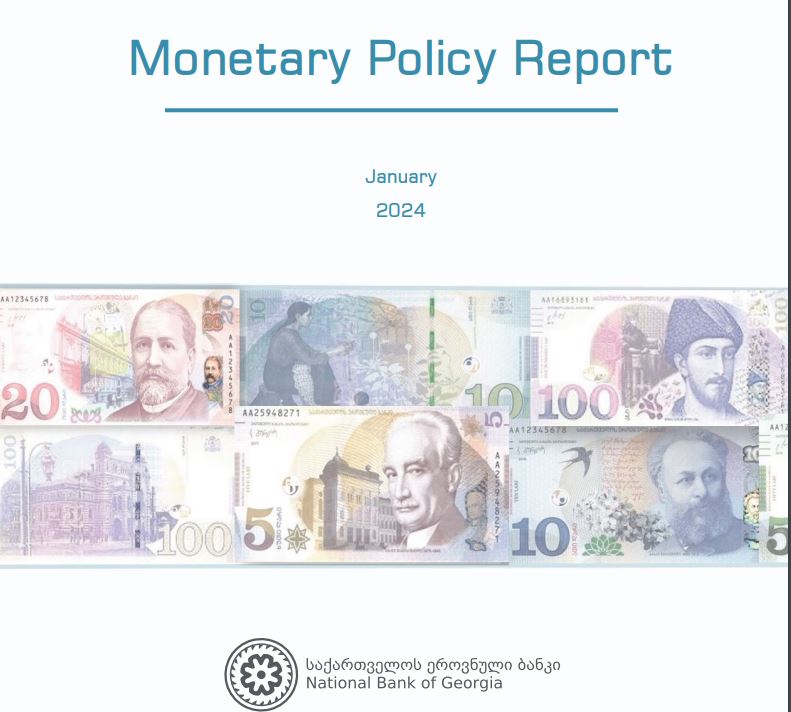
Monetary Policy Report, Georgia
The role of the National Bank of Georgia (NBG) is to influence aggregate demand and inflation expectations by adjusting the interest rate, thereby keeping inflation near to its target level in the medium term. Given the current uncertain circumstances, low
Application of Artificial Intelligence for Monetary Policy-Making
National Bank of Georgia, Working Papers, Authors: Mariam Dundua and Otar Gorgodze The National Bank of Georgia’s (NBG) Working Papers are published to elicit comments and encourage debate on ongoing research. Working Paper Series aim to present original research contributions

NATIONAL CENTER FOR EDUCATIONAL QUALITY ENHANCEMENT – key achievements and trends in Georgia’s Higher Education system
The National Center for Educational Quality Enhancement is a legal entity operating under the Ministry of Education and science of Georgia. The Center, for the purpose of external quality assurance, carries out authorization of educational institutions and accreditation of educational

GEORGIAN NATIONAL ENERGY AND WATER SUPPLY REGULATORY COMMISSION (GNERC) – REVIEW OF 2022
The Georgian National Energy and Water Supply Regulatory Commission (GNERC) has been regulating the electricity sphere since 1997, taking over the natural gas sector regulation in 1999 and water supply sector regulation in 2007 (as a result of legal changes).

BTU’s Third Mission – Potential and Actions Related to Popularizing Knowledge and Technology Transfer within University
The third mission of HEIs – that aims to connect and translate the knowledge generated within the university to the wider society has become increasingly important in the context of global knowledge economy. Universities are expected to bring more contribution

Importance of Integration of Green Technologies for Georgian Economy
Energy shortage is one of the main challenges of modern times. Global climate change has put the modern world in front of new challenges. This fact has especially affected the energy sector. The global COVID-19 pandemic has significantly changed the